


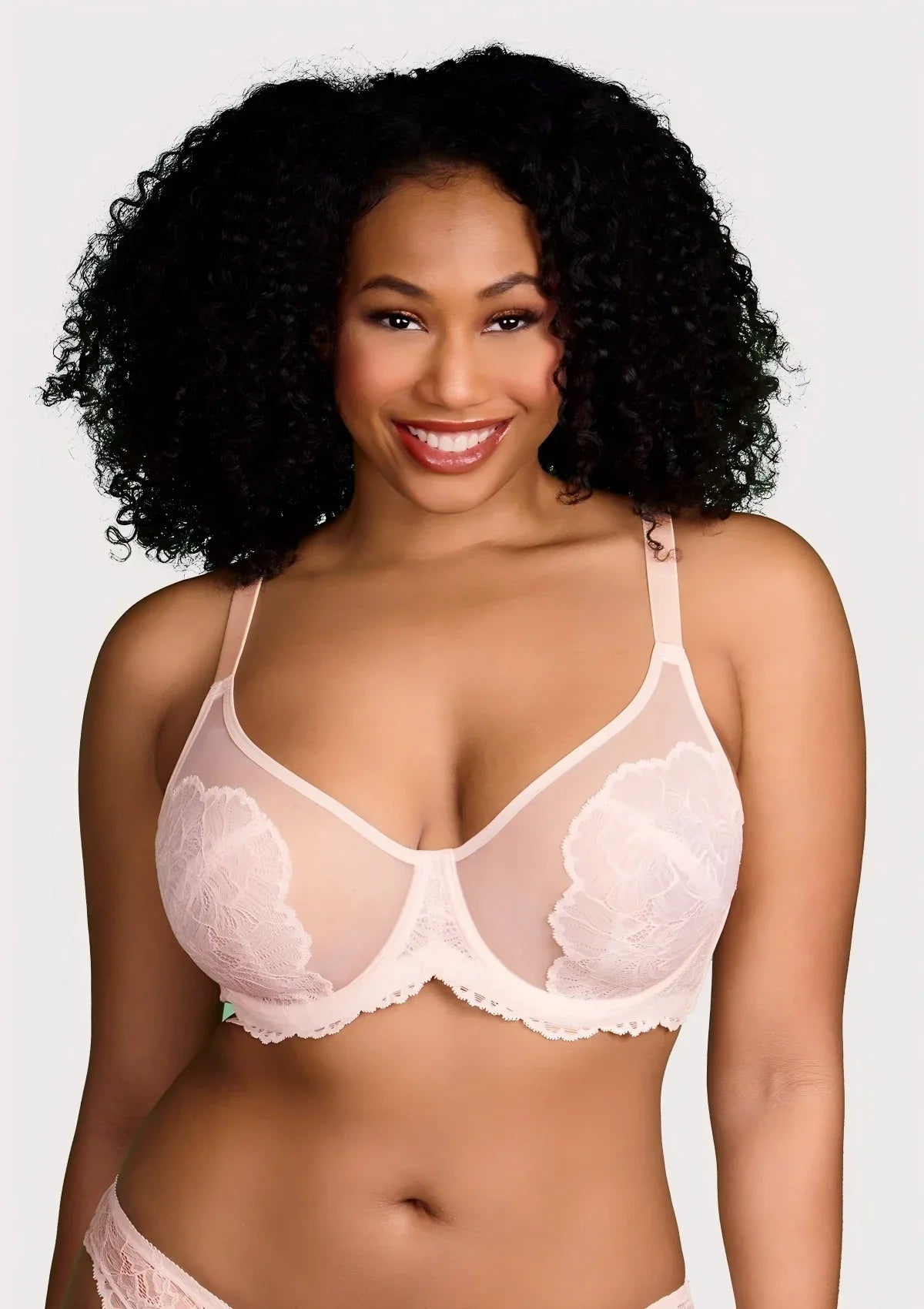


Bra Sister Sizes Explained: Find Your Best Fuller-Bust Fit
|
|
Time to read 7 min
NEW Bras, Panties & Loungewear
Buy 3, get 1 free panty
Buy 4, get 2 free panties

|
|
Time to read 7 min
Sister sizes keep cup capacity similar while changing band fit. Try one neighboring size, check your brand size chart, and remeasure if the cups or band still feel wrong.
Bra sister sizes are different band-and-cup combinations with approximately the same cup volume. To try a looser band, move up one band size and down one cup step. To try a firmer band, move down one band size and up one cup step, using the same sizing system.
For example, in a US cup sequence that uses D, DD and DDD, the neighboring sister sizes of 34DD are 32DDD and 36D. Their cups hold similar capacity while the bands fit differently, which makes them options to try rather than interchangeable labels.
If your cups seem right but the band feels off, sister sizing gives you a useful starting point. If the cups are spilling over, the wire is uncomfortable or the whole bra feels wrong, check the fit before you change sizes.
A cup letter only means something alongside its band. A 36D holds more than a 34D, even though both labels say D.
Sister sizing changes the band and cup letter together to keep cup capacity approximately consistent. This is why a 34DD and a 36D are related sizes, while a 34DD and a 36DD are not sister sizes.
You may see them described as equivalent bra sister sizes. Read "equivalent" as similar cup capacity. Wire shape, cup depth, strap placement and fabric still change the feel, especially when you move between styles or brands.
For a fuller bust, that distinction matters: a cup that holds your breast tissue still needs a band that feels secure and a shape that sits comfortably against your body.
Start with a bra whose cups fit reasonably well. Then decide whether the band needs to feel a little looser or firmer.
| What you want to change | Band adjustment | Cup adjustment | Example |
|---|---|---|---|
| A little more room around your ribs | Up one band step | Down one cup step | 34DD → 36D |
| A firmer band | Down one band step | Up one cup step | 34DD → 32DDD |
In this US example, one band step is two numbers, such as 34 to 36. One cup step follows the brand's cup sequence, which can skip a letter—DD to DDD rather than D to E, for instance.
When trying a sister size bra, begin with one neighboring size. Each step further changes more of the fit around your torso. When the nearest option misses, fresh measurements and a different style give you more than another step down the chart.
Use this sister sizes bra chart as your reference for where to start a fitting. Each listed size pairs a similar cup capacity with a different band.
| Current size | Smaller band, similar cup capacity | Larger band, similar cup capacity |
|---|---|---|
| 34D | 32DD | 36C |
| 34DD | 32DDD | 36D |
| 36D | 34DD | 38C |
| 36DD | 34DDD | 38D |
| 38D | 36DD | 40C |
These examples use the US D–DD–DDD sequence, and HSIA's size guide also displays DD/E and DDD/F labels. Cup labels after D vary between brands and countries, so the product's own chart is the reference that matters.
The closest alternatives to 34DD are 32DDD for a smaller band and 36D for a larger band, using the US sequence above. On a chart that labels DDD as F, the smaller-band option may appear as 32F.
Choose the direction based on how the band fits. If your 34DD band feels comfortable and the cups feel small, a larger cup on the same band or a different cup shape is the change that helps; 36D keeps roughly the same capacity.
Sister sizing is most useful when cup capacity is close and the band is the part that needs adjusting. When several parts of the bra feel wrong at once, remeasuring gets you further.
| What you notice | What to check next |
|---|---|
| Cups fit comfortably, but the band feels too firm | Check that the cups are not contributing to the tightness. A neighboring larger-band sister size may be worth trying. |
| Cups fit comfortably, but the band rides up | Check the hook setting and strap tension. If a new bra's band is still too loose, try the neighboring smaller-band size. |
| Band feels right, but the cup edge cuts in | Check cup size and shape. Sister sizing keeps capacity similar, so a different cup or cut addresses the problem. |
| Cups gape or wrinkle | Settle your breast tissue into the cups and adjust the straps gently. Persistent gaps call for a different size or cup shape. |
| An older bra has become loose | Account for wear and stretched elastic. Fresh measurements give you a truer starting point than a stretched band. |
| Both band and cups feel wrong, or your measurements have changed | Remeasure before choosing another size. |
Shoulder discomfort sends you back to the whole bra. Strap tension is one part of it, and a full fit check tells you more about your size than shoulder marks alone.
If you are unsure where to start, measure your bra size with HSIA’s guide. Use the result alongside a fit check and the individual product’s sizing notes.
Put the bra on, settle your breast tissue into the cups, and adjust the straps so they feel secure without pulling hard on your shoulders. Then check the fit while standing, sitting and raising your arms.
A sister size earns its place when the band improves and the cup edge and wire stay comfortable. When the band feels better and the cup does not, that cut is the wrong one for you.
Once you have a useful starting size, shop HSIA bras by cup size. Look at the available band-and-cup combinations, then choose the fabric and coverage you enjoy wearing.
The two styles below offer different looks. Both begin with your measured size and a fit check, since switching styles is no reason to change size on its own.
Skylark combines jacquard mesh, wide straps and a three-quarter cup design. It suits you when you like a lighter-looking everyday bra with texture in the fabric.
When you try it on, check how the cup edge sits after you have settled into the bra. The three-quarter coverage feels comfortable on your shape, and the straps stay where you set them.
Choose Skylark for a lightweight jacquard mesh in a three-quarter cup, with wide straps that stay put.
Pretty In Petals has unlined, mesh-lined lace cups with underwire, adjustable straps and an adjustable back closure. Its decorative straps give you a different look when you want your next bra to feel a little more dressed up.
The flexible adjustments let you refine the fit once you have chosen your size, and the lace cup edge and underwire deserve the same attention you would give a smoother style.
Choose Pretty In Petals for unlined lace cups, underwire support and decorative straps that make it feel dressed up.
A sister size also helps when your usual size has sold out, provided its band and cups fit you well. Another style in your usual size gives you the same measurements with a different look.
Skylark combines jacquard mesh, wide straps and a three-quarter cup design. Start with your measured size and check the band and cup fit before trying a neighboring sister size.

Pretty In Petals offers an unlined lace style with strappy details. Use the product size chart to choose your starting size, then check that the cups sit smoothly and the band stays level.

They have approximately the same cup capacity in the US sizing sequence used here, with different band lengths. A 36D gives you a larger band and the same cup capacity, which makes it a neighbor rather than a duplicate.
The neighboring US sister sizes are 32DDD and 36D. Choose which one to try based on whether you need a smaller or a larger band, then check the product's own size chart and fit notes.
Begin with one neighboring band size. If it creates new fit problems, remeasure or try a different style; moving several sizes at once makes the fit harder to read.
Yes, when the alternative fits comfortably. Similar cup capacity comes with a different band, and the band is what tells you whether the swap works.
The band-up/cup-down principle is the same, and the cup labels are where the two systems part company. Work in the brand's own system, especially above DD, and use its chart as the reference for the conversion.
Sister sizing keeps cup capacity close, so it rarely fixes cups that are genuinely too small. If your band fits and the cups spill, a larger cup on the same band or a different cup shape is the move.

Sarah J. (Senior Fit Specialist)
"With over 10 years in the lingerie industry, Sarah specializes in full-figure support and technical design. She believes that a great bra shouldn't just fit—it should feel like nothing at all. When she's not analyzing underwire curvature, she's helping women find their confidence, one hook at a time."


